
Presidential Symposium 2 Opening Session: MINDING OUR MICROBES: EXAMINING THE ROLE OF THE GUT MICROBIOME IN DEVELOPMENTAL PSYCHOPATHOLOGY

The gut microbiome has been trans-diagnostically linked with psychopathology in adults, and a wave of recent research has suggested that differences in the diversity and composition of the gut microbiome in early life may be associated with differential risk for the development of psychopathology. The gut microbiome undergoes a critical period of development in early life, overlapping with sensitive periods in other key physiological and stress response systems, making questions about connections between the gut microbiome and psychopathology particularly important to consider from a developmental perspective. In this symposium, we explore the role of the gut microbiome in developmental psychopathology, the state of the literature in this growing line of inquiry, and identify areas for future research. In the first presentation, Dr. Sarah Vogel will present longitudinal associations between development of the gut microbiome throughout infancy and behavioral measures of fearfulness and negative affectivity in early childhood. Next, Dr. Patricia Brennan will integrate perspectives from the social determinants of health and developmental origins of health and disease (DOHaD) frameworks to discuss connections between prenatal stress, the infant gut microbiome, and child behavior problems in two samples of African American infants and their mothers. Naomi Gancz will then discuss connections between the gut microbiome and internalizing symptoms across childhood and the role of childhood adversity in moderating gut-behavior associations. Finally, Dr. Harikesh Dubey will present some experimental work examining the effects of fecal transplant procedures in mice and implications for anxiolytic behavior, with an emphasis on neural mechanisms, including myelination and dendritic complexity. This symposium will integrate research perspectives from across disciplines, species, domains, and developmental timing to contextualize the state of our scientific understanding of the role of the gut microbiome in developmental psychopathology and inspire discussion about the potential future directions for research and intervention.
Perinatal Symposium 1: NEW DIRECTIONS IN MATERNAL NEURAL RESPONDING TO INFANTS RESEARCH

Parents’ processing of infant cues (e.g., infant emotional expressions, vocalizations) is expected to shape their caregiving behaviors. Event-related potentials (ERPs), derived from electroencephalography (EEG), are particularly valuable to investigating neural processing of salient infant cues in expectant and postpartum women with their high temporal sensitivity in measuring the magnitude and efficiency of infant cue processing, resonating with the intuitive nature of parenting. Given the cost effectiveness and ease of implementation, EEG/ERP is also advantageous for large-scale studies of parenting to ensure more reliable and replicable results. Although EEG/ERP research has demonstrated that infant emotional faces are prioritized across early and late stages of processing, questions remain regarding the maternal factors that shape variation in women’s neural responding to infant emotional faces, and in turn, child development. The proposed symposium comprises four presentations that capture new directions in maternal EEG/ERP research designed to address these gaps and identify targets for parenting interventions. In this symposium, a brief primer on EEG/ERP will be provided as part of the introduction to the speakers and overview of the symposium. The first two presentations clarify the role of psychological risk factors on (expectant) mothers’ ERPs to infant emotional expressions. In the first presentation, Kristin Bernard, PhD, will discuss the importance of mothers’ own early attachment experiences in shaping neural processing of infant cues in 81 mothers, highlighting the importance of incorporating multiple assessments of early attachment experiences in contextualizing findings. Building on this work, in the second presentation, Tingyan Liu, BS, will showcase the value of moving beyond one variable of psychological risk to considering the unique contributions of depression and attachment insecurity to maternal neural processing of infant cues in a sample of 200 pregnant women. In recognizing that an important goal of maternal brain research more broadly is to inform understanding of child development, the second two presentations demonstrate the downstream significance of mothers’ neural processing of emotional expressions for children’s development. In the third presentation, Sarah Peoples, MSc, employs a novel approach to considering neural synchrony in face processing between 139 mothers and their infants, and demonstrates that how synchrony is related to infant internalizing symptoms depends on mothers’ symptomatology. Finally, in the fourth presentation, Kathryn Wall, MPhil, will present data for the first time linking maternal neural responses to infant cues with infant developmental outcomes in 94 mother-infant dyads. Taken together, these studies showcase innovation in the application of EEG/ERP to study psychological processes contributing to maternal neural processing of infant cues and the significance for child development.

ISDP and the DEI Committee are seeking investigators from historically marginalized and underrepresented communities to apply for our inaugural DEI Committee-sponsored symposium, with intention to present at the 2024 Annual Meeting (Chicago, IL, Oct. 2nd-4th). Early-career investigators ((from graduate students to within seven years of earning a Ph.D., M.D., Psy.D., etc.) investigators are especially encouraged to apply. Topics may vary broadly across the spectrum of developmental psychobiology and represent cellular, animal, and/or human models. Symposia Themes: • Perinatal health of Black pregnant individuals • Caregiver brain health and racism/discrimination • Caregiver mental health and racism/discrimination • Bilingualism and cognition • Intergenerational transmission of trauma • Digital mental health in diverse communities Please submit below a 250-word abstract by Wednesday, March 20th. Selected individuals will be notified by Monday, March 25th. Selection does not guarantee presentation at the annual meeting; we will submit the symposium application on Monday, April 1st. By submitting this application, you are confirming that you will be willing and able to present at the annual meeting in-person if the symposium is accepted. Submission Form: bit.ly/isdp-dei-committee-symposium-form Please direct submission questions to: Lana Ruvolo Grasser, Ph.D., DEI Committee Chair, lgrasser@med.wayne.edu Joscelin Rocha-Hidalgo, Ph.D., DEI Committee Liaison, jr1679@georgetown.edu Diana Lopera Perez, DEI Committee Member, dlopera@bu.edu For more information on the annual meeting, please see here: https://isdp.org/current/ For more information on symposia submissions, please see here: https://isdp.org/call-for-symposium-submissions-for-isdp-2024/

Call for Speakers: ISDP DEI Committee Symposium

ISDP and the DEI Committee are seeking investigators from historically marginalized and underrepresented communities to apply for our inaugural DEI Committee-sponsored symposium, with intention to present at the 2024 Annual Meeting (Chicago, IL, Oct. 2nd-4th). Early-career investigators ((from graduate students to within seven years of earning a Ph.D., M.D., Psy.D., etc.) investigators are especially encouraged to apply.

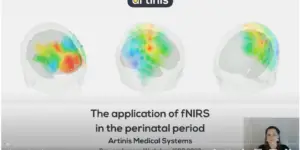
The application of fNIRS in the perinatal period, an Artinis Medical Systems sponsored workshop

Presenters: Alexandra Tiano & Rocio Fernandez, Artinis Medical Systems

Currently, wearable fNIRS devices play an important part in many research fields, because they allow measuring oxy-, deoxy- and total hemoglobin concentration changes in more naturalistic paradigms without restrictions. Among others, these measures can be translated into cortical brain activity, when fNIRS is applied on the scalp. In comparison with other neuroimaging techniques (e.g., EEG), fNIRS is not as susceptible to movement artefacts, providing robust data in many real-life scenarios. The characteristics just described, make of fNIRS a very suitable technique to use with young and more sensitive populations, such as newborns, infants and toddlers, for whom flexibility and comfort are of the outmost importance.

During this workshop, we will explain how you can measure activity using fNIRS and discuss the utility of fNIRS within different research fields, such as developmental neuroscience. We will use Artinis wearable fNIRS devices to measure brain activity and show how to work with the devices and the software.

The 2023 Rovee-Collier Mentor Award Winner: Nim Tottenham, PhD, Professor of Psychology Columbia University Department of Psychology

ISDP 2023 Awards Presentation

Description Presentation of ISDP Senior Awards: 4:00 PM The 2023 Rovee-Collier Mentor Award Winner: Nim Tottenham, PhD, with an introduction by one of his mentees, Laurel Gabard-Durnam, Ph.D., Northeastern University VIRTUAL with …

A ‘how-to’ guide to ISDP 2023

Plan in advance. Because of the intimate nature of ISDP, there are no overlapping sessions (which means you will attend everything)! But, it’s impossible to visit every poster, and if you foresee needing a break, make sure you’ve marked which sessions you don’t want to miss. Using the online program is a great way to make sure you’re on track!