
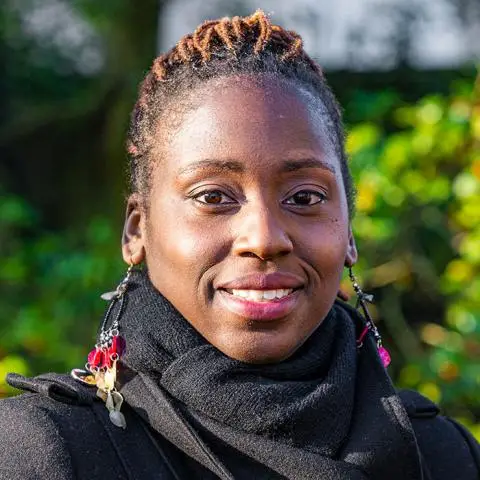
Board Member (3 Year Term)
Patrese A. Robinson, PhD
Assistant Professor, Neuroscience
Darwin J. Prockop Assistant Professor of Neuroscience
Haverford College
Department of Psychology
Haverford, USA
ISDP was my first conference as a graduate student more than a decade ago. Traveling to San Sebastián, Spain with Dr. Mark Stanton and the rest of our lab, I experienced the intimate, intellectually rich environment emblematic of the society’s scholastic culture. Over the following years, I met and grew close with the person who would become my postdoctoral advisor, Dr. Regina Sullivan, as well as professional and empirical collaborators including Drs. Gordon Barr, Maya Opendak, and Rick Richardson. Each of these encounters (along with countless others) set my trajectory further toward developmental psychobiology and laid the foundation for what remains the central pillars of my own research. More recently, I have had the pleasure of bringing my own students to this conference, where they have begun that same process of extending their professional families through ISDP’s membership. Coming from a predominantly undergraduate, small liberal arts college, my students especially value the chance to see the wider world of developmental psychobiology that is possible for them. During the 2024-25 year, I was awarded an ISDP Early Career Researcher Editorial Fellowship. This experience was pivotal in cementing my desire to engage more deeply with the society to support its mission to facilitate research in developmental psychiology. I hope to continue engaging with the society through a leadership role, where my commitment to mentorship, service, and scholarly progress can be put to work for the benefit of its membership. In particular, I am eager to help expand ISDP’s visibility and accessibility for students at primarily undergraduate institutions, who often have limited exposure to the kind of research community this society offers, and to help ensure that the pathway I found into this field remains open to the students who need it most.
Bio:
Dr. Patrese Robinson is a behavioral neuroscientist whose research focuses on the lifetime development of learning and memory systems. Her graduate and postdoc work characterized the behavioral changes associated with the development of hippocampal learning systems in childhood and examined how different learning-related genes in the brain change during early life development. During her graduate and postdoc periods, her research focused on how early life factors (like alcohol and drug exposure or infant trauma) influence the development of emotional learning systems. She also investigated how maternal maltreatment disrupted the ability of mothers to influence fear learning and how neonatal opioid exposure alters infant developmental trajectories. Currently, her lab is exploring how the ability to learn about the environment and remember that information changes during early life, and which brain regions facilitate these changes. Dr. Robinson’s research combines extensive behavioral analyses with methods from psychobiology, neuropharmacology, molecular biochemistry, and other areas to determine the relationship between the brain and the lifetime development of behavior. Using these methods, she hopes to understand the typical development of learning and memory systems, how this development can be disrupted by early-life events, and to develop potential interventions to help lessen the harmful effects of these events.
A committed advocate for broadening participation in science, she co-founded Project: BrainLight as a graduate student, a volunteer initiative bringing hands-on neuroscience experiences to underrepresented middle-school students throughout Delaware and Philadelphia. Dr. Robinson completed a collaborative postdoctoral fellowship at NYU Langone/Nathan Kline Institute, with additional mentorship at Children’s Hospital of Philadelphia, before joining Haverford in 2021. Using rodent models, Dr. Robinson’s research examines the psychobiological mechanisms governing the developmental emergence of learning and memory systems, and how early-life adversity (including maternal maltreatment and neonatal opioid or alcohol exposure) disrupts their typical trajectory. Currently using recognition memory task variations, her lab integrates behavioral analysis with psychobiology, neuropharmacology, and molecular biochemistry to understand how the brain supports learning and memory across the lifespan, with the goal of informing interventions that lessen the harmful effects of early-life adversity.